
More Than Two People Enter the Marriage
Many people do not marry only a person.
They marry a picture.
They marry what they imagined love would feel like. They marry what they saw in their parents' home. They marry what culture praised, what faith was rightly or wrongly explained to mean, what films presented as romance, what social media displayed as happiness, what friends warned them to fear and what old pain made them determined never to endure again.
Some pictures are beautiful. They contain hospitality, prayer, laughter, faithfulness, shared meals, sacrifice and the quiet belief that marriage should be honoured.
Other pictures carry fear. They contain silence where apology should have been, control mistaken for leadership, exhaustion praised as virtue, money used as power, conflict handled through shouting or withdrawal, and affection that disappeared whenever responsibility became difficult.
The wedding may present two people before God and witnesses, but marriage soon reveals the invisible company each person has brought along.
Childhood enters. Family patterns enter. Financial habits enter. Ideas about manhood and womanhood enter. Expectations about children, intimacy, housework, money, faith, rest, respect, leadership, forgiveness and responsibility enter.
The marriage is therefore not only a meeting of two lives. It is also a meeting of two private pictures, each one carrying details the other person may never have been shown.
The Picture We Never Announced
An expectation becomes especially powerful when it remains unspoken.
One spouse may believe that love should notice without being asked. The other may believe that needs should be stated clearly. One may expect all money to be combined. The other may have grown up seeing separate accounts. One may imagine frequent visits from extended family. The other may experience privacy as protection. One may read silence as peace. The other may read it as rejection.
Neither person may have announced these expectations. Yet both may judge the marriage by them.
This is how a private picture becomes an invisible promise.
The spouse is measured against an agreement they never heard, a family rule they never accepted or a scene that existed only in another person's imagination.
Then disappointment speaks as accusation:
You should have known.
If you loved me, I would not have to ask.
This is how a good husband behaves.
This is what a good wife does.
My family never handled things this way.
The pain may be real, but the charge may still be unfair. A person cannot knowingly honour terms that were never brought into the conversation.
An invisible promise is still invisible, no matter how obvious it feels to the person carrying it.
Where the Picture Comes From
Before we gained wisdom about marriage, many of us learned it through observation.
We watched who cooked and who rested. We watched who earned money and who controlled it. We noticed who apologised and who never did. We saw whether disagreement was discussed, shouted, buried or reported to the extended family. We observed whether boys were prepared to participate in a home or prepared only to be served. We watched whether women were allowed to be tired, ambitious, expressive and fully human.
Observation becomes instruction long before it becomes language.
A man may never consciously decide that his wife should carry the entire home. Yet if every woman around him worked without rest while the men remained guests to domestic life, imbalance may feel normal.
A woman may never deliberately choose silence, but if the women she admired were praised for enduring everything quietly, speaking a need may feel like failure.
Faith communities also shape the picture. At their best, they teach covenant, humility, service, fidelity, prayer, forgiveness and responsibility. At their worst, spiritual language may be used to protect appearances, silence questions or excuse conduct that love should correct.
Pain contributes its own details. Someone who grew up with financial instability may expect money to provide emotional safety. Someone who witnessed betrayal may interpret ordinary privacy as secrecy. Someone who was ignored may expect constant reassurance. Someone who was controlled may fear every strong opinion.
These responses deserve compassion, but compassion does not require them to remain unexamined.
What formed the picture explains it. It does not automatically make every part of it wise.
Expectation Is Not the Enemy
Marriage does not become healthy by expecting nothing.
If a spouse says, 'Expect nothing from me,' that is not freedom. It is a refusal of responsibility.
Healthy expectations protect a marriage. A husband and wife should be able to expect honesty, faithfulness, dignity, kindness, safety, communication, tenderness, effort and shared ownership of the life they are building. Children should be able to expect a home that does not make them afraid of love.
The problem is not expectation itself.
The problem is expectation that is hidden, unrealistic, unfair, one-sided, inherited without examination or used as a weapon.
A worthy standard should not be confused with fantasy. Safety is not fantasy. Fidelity is not fantasy. Respect is not fantasy. The refusal of cruelty, coercion, humiliation, financial control and violence is not an unreasonable demand.
At the same time, mind-reading is not intimacy. Permanent ease is not a reasonable standard. Constant romance is not the only evidence of love. One person carrying every burden is not partnership. Prayer without changed conduct is not spiritual maturity.
Mature expectation holds both truths: marriage deserves honourable standards, and those standards must be spoken, mutual, practical and wise.
The Morning That Did Not Match the Photograph
I remember a family morning that had already been arranged perfectly in my mind.
Everyone would dress on time. Breakfast would move smoothly. The children would be ready. We would leave peacefully, perhaps even early.
That was the picture.
Real life brought a missing sock, a stained shirt, a small spill, competing needs and a clock that seemed to move faster each time I looked at it.
With every interruption, frustration rose. For a moment, I was tempted to make the whole morning heavy because it did not resemble the image I had prepared.
Then I recognised that the deeper problem was not the sock, the shirt or the spill. I had expected an ordinary family morning to behave like a photograph.
Photographs hold still. Families do not.
They move, interrupt, forget, grow tired, need help and ask love to become patient in real time.
The peace of that morning did not depend on recovering the original picture. It depended on releasing it. Find the sock. Change the shirt. Wipe the spill. Simplify breakfast. Leave the house without making everyone feel that they had failed an image they never saw.
That morning taught me that some disappointment is not evidence that the home is failing. Sometimes it is evidence that the private picture needs to mature.
When the Picture Becomes a Courtroom
A hidden expectation can quietly turn marriage into a courtroom.
One spouse becomes the prosecutor, gathering evidence that the other keeps failing. The forgotten errand, the late reply, the unwashed plate and the missed gesture are entered into a private case.
The other spouse may not even know that a trial is taking place.
Over time, small events begin carrying larger meanings:
The towel is no longer only a towel. It means, 'You do not see what I carry.'
The late response is no longer only a late response. It means, 'I am not important to you.'
The financial decision is no longer only about money. It means, 'I do not feel safe or included.'
The family visit is no longer only a visit. It means, 'Our marriage has no boundary.'
These deeper meanings need language. Without language, resentment becomes the interpreter.
Bring the picture to the table, not the courtroom.
Say, 'This is what I expected.' Say, 'This is what support means to me.' Say, 'This pattern is making me feel alone.' Ask, 'What did you imagine marriage would look like here?'
Conversation does not guarantee immediate agreement. It does something essential first: it makes the real issue visible.
Mind-Reading Is Not Intimacy
There is a small truth inside the wish to be known without explanation.
Love should become observant. A spouse should learn the other person's rhythms, burdens, fears and ways of receiving care. Long companionship should deepen attention.
But attention and mind-reading are not the same thing.
People come from different homes, emotional languages and experiences. What is obvious to one may be invisible to the other. What feels like support to one person may feel intrusive to another. What one calls rest, another may call withdrawal. What one calls respect, another may experience as distance.
Clarity is not begging. Asking is not failure. A respectful conversation is not evidence that love is absent.
Love learns to notice, and love also learns to speak.
A healthy marriage should not require one person to explain every obvious responsibility forever. Carelessness must not hide behind, 'You did not tell me.' Yet the answer to carelessness is accountable learning, not permanent silence followed by resentment.
The wiser sentence is not, 'You should have known.' It is, 'I need you to understand this, and I want us to build a better pattern together.'
Bring the Picture Into the Light
A couple can examine expectations without turning the conversation into accusation.
Begin with curiosity.
Ask: What did marriage look like in your childhood home? Who made decisions? Who handled money? Who carried the domestic and emotional work? How were anger, apology, affection, faith, rest and extended family handled?
Then ask: What did you admire? What frightened you? What did you promise yourself you would repeat? What did you promise yourself you would never repeat?
These questions reveal that some expectations came from wisdom, some from fear and some from survival.
Next, name the present expectation clearly. Avoid labels such as 'good husband', 'good wife', 'real man' or 'submissive woman' unless you are prepared to explain the conduct you mean. Labels often conceal more than they clarify.
Say what the expectation looks like in practice.
Does support mean taking ownership of bedtime twice a week? Does respect mean disagreeing without public humiliation? Does financial partnership mean discussing commitments above an agreed amount? Does romance mean protected time, affectionate words, thoughtful gestures or practical relief in a demanding season?
The clearer the behaviour, the less room resentment has to invent its own interpretation.
Five Tests for a Mature Expectation
Before turning an expectation into a standard for the marriage, test it.
1. Is it honourable and safe? Does it protect dignity, truth, faithfulness and mutual wellbeing, or does it excuse control, fear, silence or one-sided suffering?
2. Has it been spoken clearly? Have both people heard the expectation in language they can understand?
3. Is it mutual? Does the expectation call both people to responsibility, or does it create comfort for one and exhaustion for the other?
4. Is it realistic for this season? Pregnancy, illness, grief, young children, work pressure, relocation and financial strain may require the form of responsibility to change without abandoning its value.
5. Is it open to wisdom? Can the expectation be corrected by truth, counsel, growth and the actual person you married?
A mature expectation is strong enough to protect what matters and humble enough to be refined.
Create a Shared Picture
Marriage cannot thrive indefinitely with two competing private pictures.
The goal is not for one spouse to erase their history and adopt the other's family system. The goal is to create a shared picture suited to the covenant the two of you are building now.
A shared picture may keep beautiful inheritances: prayer, hospitality, generosity, respect for elders, commitment, family meals, tenderness and care for children.
It may also retire harmful patterns: emotional silence, financial secrecy, gender entitlement, public humiliation, extended-family control, spiritual manipulation and the praise of exhaustion.
Some traditions deserve honour. Some need amendment. Some need to end with us.
A wise couple can say, 'This is what I saw growing up, but it does not have to be what we repeat.'
They can also say, 'This part of my upbringing was beautiful. I would like us to preserve it.'
Shared vision is not created once. It must be revisited as the marriage enters new seasons. The picture that fitted early marriage may need adjustment during parenthood, illness, career change, caregiving, migration, grief or later life.
A living marriage keeps developing the picture together.
A Picture Audit
Take a quiet moment and complete these sentences:
1. I expected marriage to...
2. I expected a husband or wife to...
3. In my childhood home, love looked like...
4. The marriage pattern I most want to preserve is...
5. The pattern I do not want to repeat is...
6. One expectation I have never explained clearly is...
7. One expectation that may need to be matured, corrected or released is...
8. One honourable standard I need to speak about with greater clarity is...
Do not use the answers as charges against another person. Use them as material for understanding, preparation and wise conversation.
See the Person Beside the Picture
A picture can guide hope, but it can also become so demanding that we stop seeing the person standing beside it.
Your spouse is not a character hired to perform the marriage you imagined. They are a whole person with a history, voice, calling, limits, fears, gifts and capacity that will change across seasons.
Marriage asks us to keep honourable standards while remaining curious about the real person we chose.
It asks us to distinguish a harmful pattern from an imperfect day, a worthy expectation from a private fantasy, and a genuine need from an inherited script that has never been examined.
Sometimes marriage is not disappointing us because marriage is bad. Sometimes it is confronting the picture we carried into it.
Bring that picture into the light.
Keep what protects love. Correct what distorts it. Release what belongs to fantasy. Speak what the other person needs to understand. Then build a shared life that does not merely reproduce the past or imitate somebody else's public image.
Let the picture become wiser than the one you first carried.
Continue the Journey
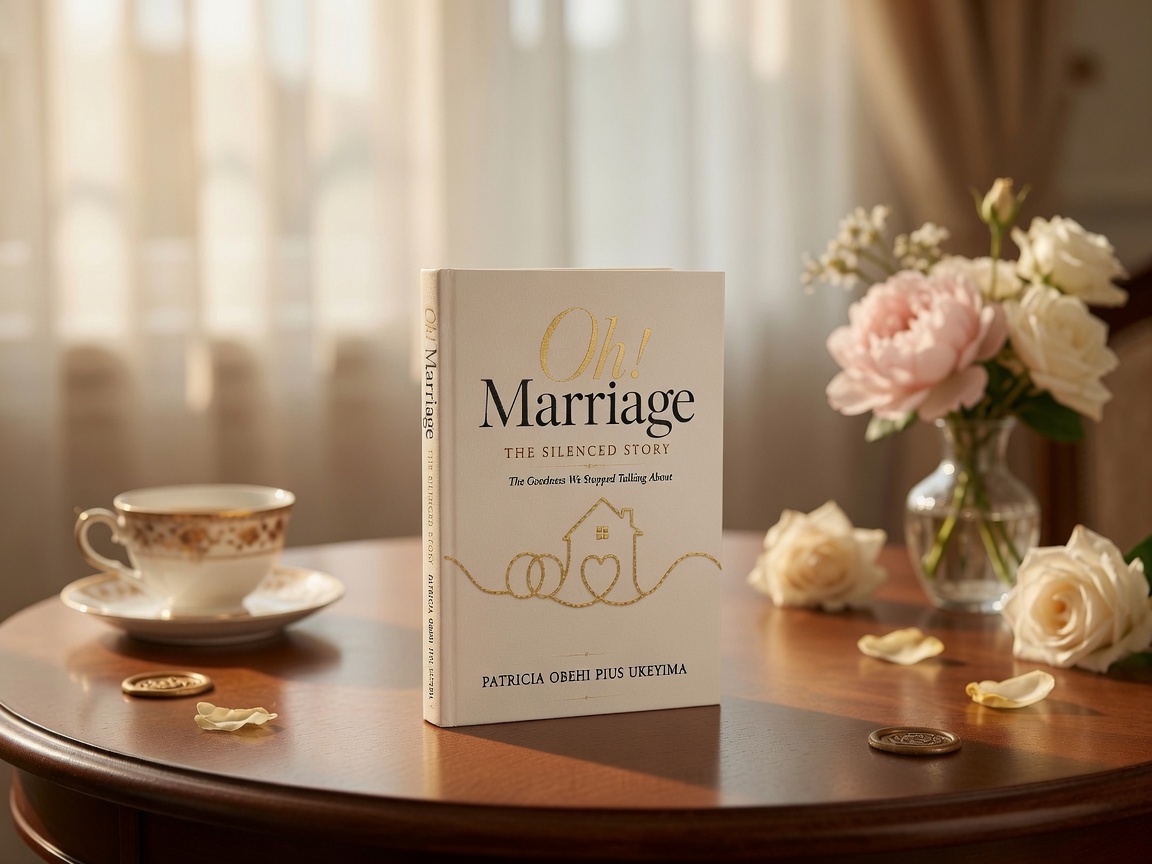
In Oh! Marriage: The Silenced Story, Patricia Pius Ukeyima explores the expectations, inherited scripts and private pictures couples bring into marriage. The book offers practical guidance for turning assumptions into honest conversation, shared responsibility, wise boundaries and mature love.
A Closing Reflection
An expectation spoken with humility can become a plan; left hidden, it may harden into evidence against someone who never heard the charge. Bring the picture into the light, and let truth teach it how to live.
Patricia Pius Ukeyima Lawyer | Author | Speaker | Mentor Love Intentionally. Live Intentionally. Grow Intentionally.