The Bags No One Sees
At an airport, luggage is weighed, tagged and assigned a destination before the passenger boards.
Marriage offers no such counter.
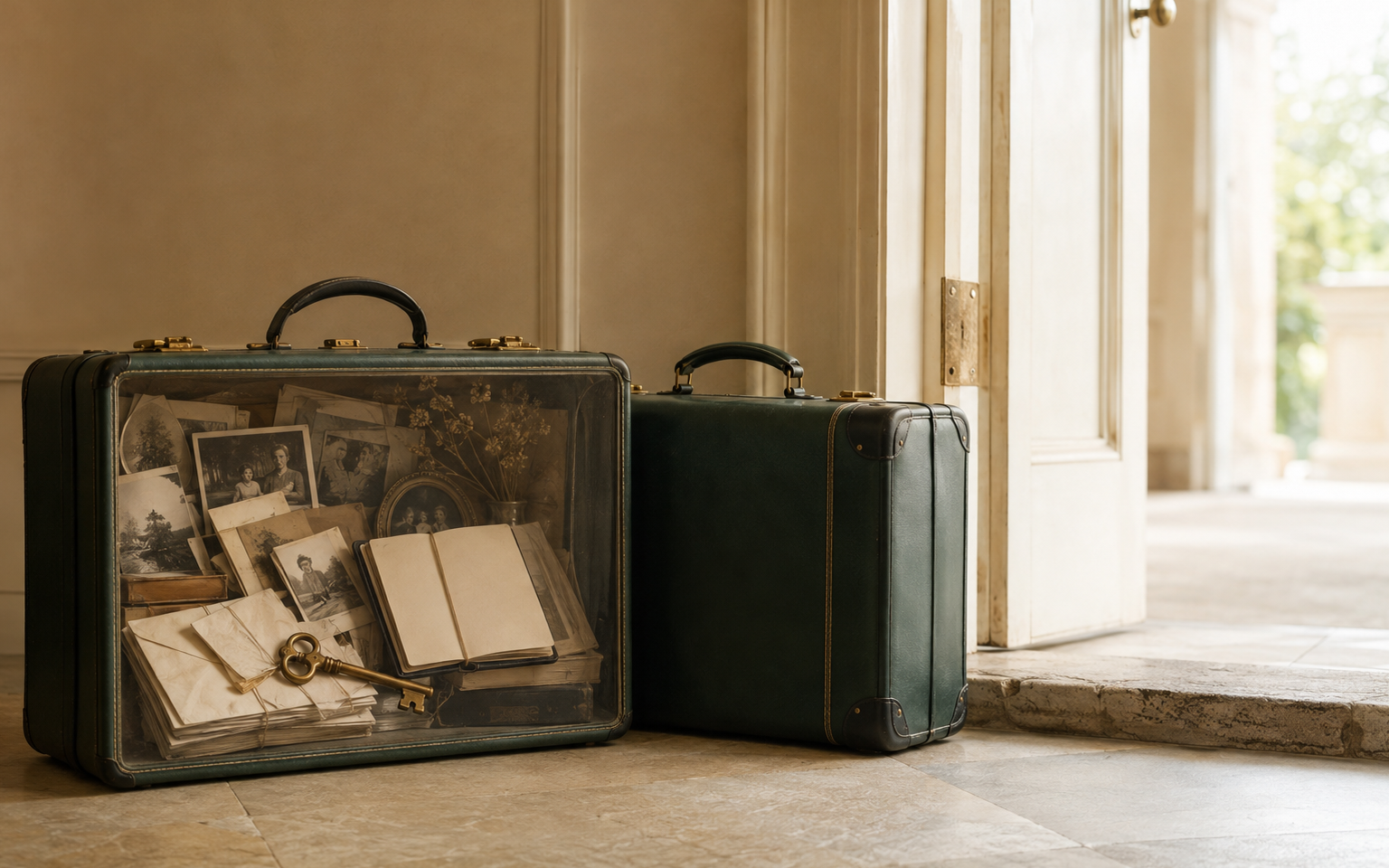
Two people may arrive at the wedding carrying visible clothes, gifts and plans, while the heavier belongings remain unseen: family patterns, old fears, money anxieties, ideas about authority, memories of betrayal, habits of silence, expectations of care and lessons learned in homes where no one explained what was being taught.
The wedding joins two people. Daily life begins opening their bags.
A disagreement about lateness may carry an old fear of abandonment. A conversation about money may awaken memories of scarcity. A request for privacy may sound like rejection to someone raised in a family where closeness meant constant access. A spouse may withdraw from conflict not because the issue is unimportant, but because raised voices once meant danger.
The present moment is real, but it is not always travelling alone.
The picture is what we expect marriage to look like. The luggage is what we instinctively carry into it.
Not All Luggage Is Damage
The language of emotional baggage is often used as an accusation, making people feel defective simply because they have a history.
But no one enters marriage empty, and not everything carried from the past is harmful.
Some people bring patience learned from watching parents repair after disagreement. Some bring hospitality, humour, prayer, resilience, responsible stewardship, tenderness towards children or a strong sense of family loyalty.
Others bring survival skills that once protected them: vigilance, emotional restraint, self-reliance or the habit of solving problems alone.
A skill can be wise in one setting and costly in another.
The independence that helped a child survive an unreliable home may later make receiving help feel unsafe. The silence that prevented conflict in childhood may create distance in marriage. The watchfulness that once detected danger may interpret ordinary mistakes as threats.
The question is not whether we have luggage. The question is whether we know what we are carrying and whether it still belongs in the home we are building.
When a Strength Changes Rooms
There were evenings when I returned from demanding legal and public-service work still carrying the habits that had served me there: precision, self-reliance and the instinct to solve problems quickly.
At home, those strengths could become heavy if I assumed I should carry everything alone, treated every difficulty as a problem to be managed, or forgot that closeness sometimes requires explanation rather than efficiency.
Marriage taught me that a strength does not remain wise merely because it was useful elsewhere. What serves us in one room may need to be softened, shared or translated in another.
What We Learn Before We Have Language
Many marital habits begin long before anyone discusses marriage.
Children watch who speaks, who apologises, who handles money, who is allowed to rest, whose anger controls the room and whose needs disappear.
They notice whether affection is spoken, whether conflict is repaired, whether secrets are protected, whether sons and daughters are treated differently and whether faith produces humility or is used to demand silence.
Observation becomes instruction before it becomes language.
A child may conclude that love means sacrifice without limit, that authority must never be questioned, that men should not show fear, that women should carry the invisible work, or that problems should remain inside the family no matter how much harm is occurring.
Years later, these conclusions may enter marriage as instincts rather than ideas.
Because they feel familiar, they can feel true.
Familiarity is not proof of wisdom.
The Bag Marked Conflict
Every family teaches a conflict language.
Some homes argue loudly and recover quickly. Some speak politely while resentment travels beneath the surface. Some use silence as punishment. Some avoid disagreement until one event releases years of stored anger.
A spouse raised in a loud but loving home may believe intensity proves honesty. A spouse raised around frightening anger may experience the same volume as danger.
One says, "Why will you not talk to me?"
The other thinks, "Why do you not see that I am trying to feel safe?"
Neither interpretation fully explains the other person.
Conflict becomes more manageable when couples ask not only, "What are we arguing about?" but also, "What does conflict mean to each of us?"
The issue in the room may be present-day. The nervous system may be answering an older room.
Healthy conflict requires learning a new shared language - one that permits truth without intimidation, pauses without abandonment and repair without humiliation.
The Bag Marked Money
Money is rarely only arithmetic. It can represent safety, freedom, generosity, fear, loyalty or control.
A person raised with scarcity may save because spending feels like exposure; someone from a more secure home may interpret careful budgeting as unnecessary anxiety.
One spouse may see lending to relatives as loyalty, the other as instability. One may call financial privacy dignity; the other experiences secrecy.
The numbers matter, but their meanings often drive the conflict. Ask: What are the facts, and what story does each of us attach to them?
Shared stewardship requires transparency, agreed priorities and safeguards against domination. Financial fear may explain control, but it does not justify captivity.
The Bag Marked Love
People recognise love in different forms. One grew up hearing affection; another experienced love through food, school fees, practical help or quiet presence.
One spouse wants verbal reassurance while the other assumes commitment should be obvious. One reaches for closeness after conflict; the other needs calm before touch feels welcome.
Sincere love can be difficult to read when it is expressed only in the giver's familiar language.
Couples can ask: How do you recognise care? What makes affection feel safe? What did love look like in your family, and what was missing?
The aim is not to abandon one's natural way of loving, but to become multilingual enough that care can be received.
The Bag Marked Family Loyalty
Marriage does not erase the families from which two people came.
Parents, traditions and obligations still matter. Difficulty begins when loyalty to the family of origin prevents the marriage from forming its own boundaries.
Some expect parents to know every decision or family support to flow without discussion; others view continuing obligations as interference.
Neither closeness nor independence is wise in every form.
A marriage needs boundaries that protect the new home without requiring contempt for family.
Maturity preserves honour where honour is safe.
Pain Travels Unless It Is Named
Unresolved pain does not disappear because a person marries someone kind.
Betrayal can travel as suspicion, neglect as testing, shame as defensiveness and grief as irritability. A history of abandonment can make ordinary distance feel like departure.
The new spouse may be asked to prove repeatedly that they are not the person who caused the wound. One feels foolish for reacting; the other feels accused of a history they did not create.
Naming the wound changes the conversation.
Instead of saying, "You always make me feel unsafe," a person may learn to say, "When communication suddenly stops, an old fear becomes active in me. I know you did not create it, but I need us to discuss what reassurance and responsibility look like now."
This does not remove accountability for present behaviour. It separates the current issue from the older wound so that both can be addressed honestly.
Explanation Is Not Permission
My legal background has taught me that context matters.
A person's history may explain why a reaction developed. Explanation, however, is not the same as permission.
A childhood of financial insecurity may explain anxiety around money. It does not justify surveillance, secrecy or control.
Past betrayal may explain fear. It does not permit constant accusation or invasion of privacy.
Growing up around harsh speech may explain a person's conflict style. It does not excuse verbal cruelty.
A person can be wounded and still cause wounds.
Compassion asks what happened to you. Responsibility asks what you will do with what happened.
Marriage needs both questions.
Without compassion, people are reduced to their worst behaviour. Without responsibility, history becomes a permanent licence to repeat harm.
Love Cannot Carry Healing Alone
A loving spouse can listen, reassure, learn patterns, support treatment and participate in healthier ways of relating.
But marriage cannot require one partner to become the other's only counsellor, regulator, rescuer or source of healing.
Trauma, addiction, severe anxiety, depression, compulsive behaviour, unresolved grief or destructive family patterns may require qualified professional support, pastoral care or specialised services.
Seeking help is not a confession that the marriage has failed; it may be an act of stewardship.
A spouse can walk beside healing. They cannot complete it on another person's behalf.
Love supports responsibility; it should not replace it.
Unpack Without Turning the Contents into Weapons
Vulnerability is one of the ways couples learn what the luggage contains.
A spouse may disclose a childhood fear, a family secret, a previous betrayal or a source of shame.
That knowledge must be handled carefully.
What is shared for understanding should not later be used to win an argument.
Do not turn your spouse's map of pain into a map of where to strike.
Confidentiality within marriage is not absolute when safety is at risk or professional help is necessary. But in ordinary vulnerability, trust grows when disclosure is not punished.
The purpose of unpacking is not to create a file of evidence against one another.
It is to understand what has been shaping the journey and decide together what can be carried differently.
The Marriage Luggage Inventory
Couples can begin with five questions:
1. What am I carrying? Name the habit, fear, belief or family rule as precisely as possible.
2. Where did I first learn it? Identify the home, event, relationship, culture or season that gave it meaning.
3. What did it once protect or provide? Even harmful patterns may have begun as attempts to survive, belong or stay safe.
4. What does it now cost our marriage? Consider trust, intimacy, money, communication, rest, parenting, faith and emotional safety.
5. What new practice will replace it? Insight is important, but change needs a behaviour, boundary, conversation, support system or return plan.
This inventory is not a one-night interrogation; some luggage opens slowly.
The aim is curiosity without accusation and responsibility without shame.
Decide What Stays, What Changes and What Ends Here
Not everything inherited should be discarded.
Some traditions deserve to be preserved: hospitality, prayer, generosity, respect for elders, family meals, service and shared celebration.
Some need amendment because the present marriage has different needs.
Some must end.
Silence around abuse must end.
Gendered entitlement must end.
Financial secrecy must end.
Humiliation disguised as discipline must end.
The belief that one spouse must disappear for the other to thrive must end.
Marriage creates an opportunity to choose deliberately what the next generation will inherit.
Some patterns arrived through us. They do not have to continue beyond us.
When the Luggage Contains Danger
Not every burden can be unpacked safely in a private conversation.
Violence, coercive control, stalking, sexual coercion, serious threats, financial captivity and severe emotional abuse require more than mutual communication advice.
A person experiencing danger is not responsible for helping the abusive partner understand their childhood or heal their wounds.
History may explain a pattern of harm. It does not make the harmed spouse responsible for enduring it.
Qualified local support, legal advice, medical care, specialist counselling or emergency assistance may be necessary.
Safety is not disloyalty.
A marriage should not become the place where one person's unresolved pain is granted permission to endanger another.
Travel Lighter, Not Empty
The goal of marriage is not to become people without history.
That is impossible.
Our pasts contain wisdom, culture, memory, faith, grief, resilience and love. They help explain how we became who we are.
The goal is to travel with awareness.
Know what is in your hands.
Refuse to make your spouse carry what you will not examine.
Ask for help where the weight exceeds what love alone can hold.
Choose together what belongs in the home you are building.
You may not have packed every bag you carry. You are still responsible for deciding whether it will remain unopened in the middle of your marriage.
A lighter marriage is not one without a past. It is one in which the past has been named, examined and prevented from silently governing the future.
The goal is not to arrive without history, but to ensure that history no longer decides the future without our consent.
Continue the Journey
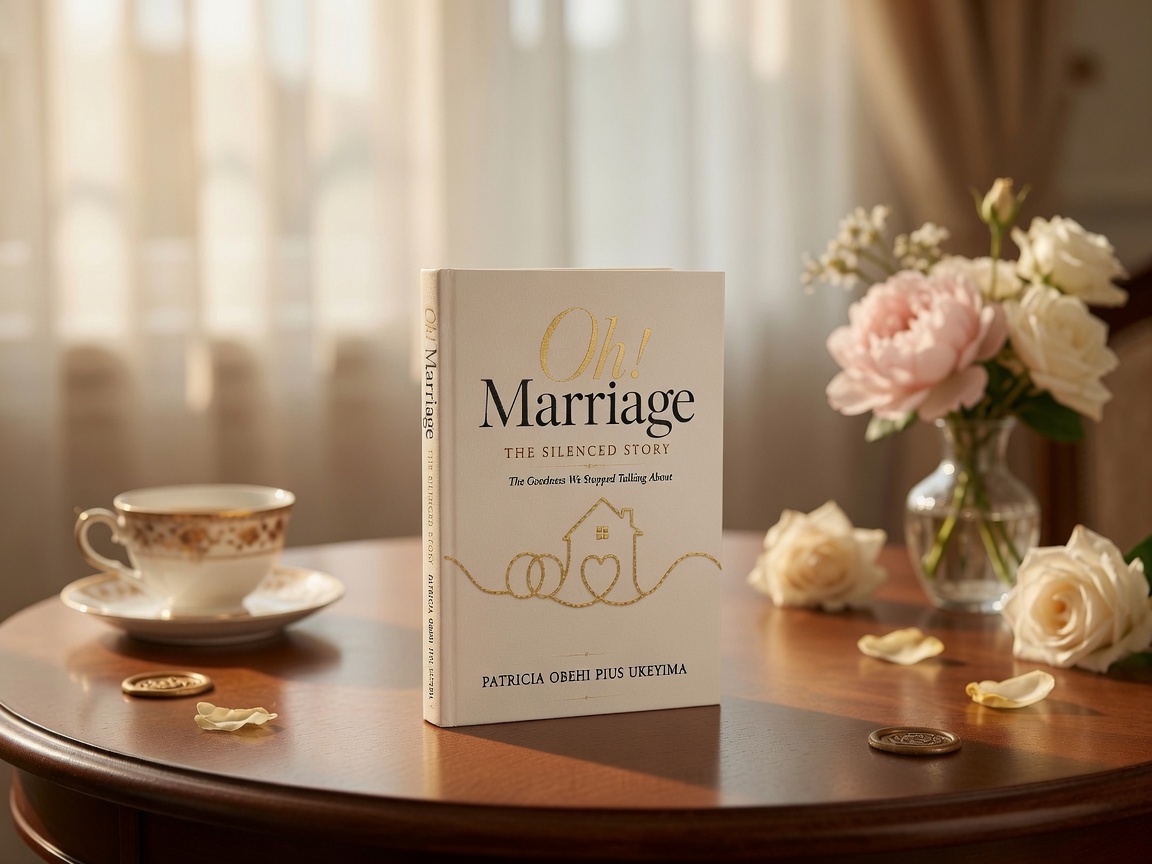
In Oh! Marriage: The Silenced Story, Patricia Pius Ukeyima explores the expectations, family patterns, emotional histories and unspoken rules that enter marriage with us. The invitation is not to deny the past, but to examine it honestly and build a home guided by truth, safety, responsibility and intentional love.
A Closing Reflection
You may not have chosen every burden you carry, but you can choose whether it remains hidden, whether it becomes a weapon and whether it is handed unchanged to the next generation. The past may explain the weight; it does not have to decide the destination.
Patricia Pius Ukeyima Lawyer | Author | Speaker | Mentor Love Intentionally. Live Intentionally. Grow Intentionally.