
Conflict Is Not Proof That Love Has Failed
Many couples are frightened by conflict because they interpret disagreement as evidence that something is wrong with the marriage.
They imagine that healthy couples naturally agree, understand one another quickly and move through life with little friction. When anger, disappointment or competing needs appear, they wonder whether love has weakened.
But two people can love each other deeply and still perceive the same event differently. They carry different temperaments, histories, responsibilities, fears, capacities and ways of processing pain.
Conflict is not always the enemy of marriage.
Unmanaged conflict can become destructive. Avoided conflict can become distance. Honest conflict, handled with dignity and repair, can reveal what the relationship needs to understand, change or protect.
The absence of visible disagreement does not always mean peace. Sometimes it means one person has stopped believing it is safe or useful to speak.
A marriage is not strengthened because no one ever becomes angry. It is strengthened when anger does not become permission to destroy dignity.
Communication Opens the Door; Conflict Needs a Framework
Healthy communication asks how truth should be spoken: with wise timing, disciplined tone, accuracy and tenderness.
Healthy conflict asks a different question. Once two needs, two interpretations or two hurts have collided, what must govern the room?
The issue is no longer only whether the words are gentle. The disagreement needs boundaries, focus, freedom from intimidation, a reliable pause, accountability and a route to repair.
Communication can be careful and conflict can still fail if one person controls the money, refuses the return, changes the subject, attacks identity or treats quietness as resolution. The quality of the sentence matters; so does the structure into which the sentence is released.
One of the lessons I carry from the conversation in which Pius asked what outcome I desired began before I had found the right words. I had entered with heat in my heart, convinced that intensity proved sincerity. His question did not erase my hurt; it interrupted the impulse to let pain decide the method.
What followed taught us something beyond tone. We became more intentional about pausing when emotion became too hot. A pause was not a convenient exit. It had to protect truth from cruelty and then return at a time when both of us could think, listen and take responsibility.
The pause did not solve the issue. Its value came from returning with a clearer purpose, staying with the matter in front of us and repairing what the exchange had damaged.
Marriage Is Not a Courtroom
My legal training taught me the value of evidence, precision and procedure.
In a courtroom, opposing parties present competing cases. Each side tests the other, and a judge eventually determines the legal outcome. That structure serves an important public purpose.
Marriage cannot survive if every disagreement becomes adversarial litigation.
A spouse is not opposing counsel. The home is not a tribunal. The person across the table should not have to lose in order for truth to be found.
Yet couples can unknowingly build cases. They collect old failures, recruit witnesses, cross-examine motives and search for one sentence that will prove the other person wrong.
Winning the argument can become more important than understanding what the argument is costing.
The strongest case against your spouse may still be a weak case for your marriage.
Healthy conflict asks for evidence and accountability, but it does not turn intimacy into prosecution.
Name the Issue and Set the Boundaries
A problem becomes harder to solve when it is fused with identity.
The missed payment becomes, “You are irresponsible.” The forgotten appointment becomes, “You do not care about this family.” A request for help becomes, “You are selfish.”
These statements may express real frustration, but they expand one event into a verdict on the entire person.
Healthy conflict names behaviour, impact and needed change:
“When the payment was missed, we incurred an avoidable charge. I need us to agree on who is responsible and what reminder system we will use.”
The sentence is direct. It does not pretend the mistake was harmless. It gives the problem a shape that can be addressed.
Name the issue clearly. Do not make the person the issue.
Couples should also agree on how they will disagree. Some boundaries must remain firm:
No insults, degrading names, threats or intimidation.
No blocking exits, breaking objects or using physical presence to create fear.
No exposing private vulnerabilities to family, friends or social media in order to gain support.
No using sex, money, children, faith, immigration status or abandonment as instruments of control.
No forcing immediate resolution when one person is too distressed to participate safely or wisely.
These boundaries do not make conflict polite while leaving injustice untouched. They ensure that truth can be spoken without the method becoming another injury.
Stay with the Matter; Pause with a Return
Conflict becomes unmanageable when one conversation is required to carry every unresolved disappointment in the marriage.
A late arrival becomes a discussion about ten years of feeling unimportant. A household task becomes proof that one spouse has never cared. A financial concern becomes a catalogue of every previous mistake.
The history may be real. It still needs structure.
Healthy conflict distinguishes among the present event, the recurring pattern, the older wound it activated and the practical decision that must now be made.
Trying to resolve all four at once may overwhelm the conversation.
Begin with the matter in front of you. If it reveals a wider pattern, name the pattern and arrange a separate time to address it properly.
One conversation should not be forced to carry the whole marriage.
There are also moments when continuing becomes unwise. Voices are rising. The body is overwhelmed. Words are becoming sharper than the issue requires.
A pause can protect the relationship, but a pause without a return can feel like abandonment or punishment.
A healthy pause is specific: “I need twenty minutes to calm down. I will come back at eight o'clock.”
The return matters as much as the pause.
Silence used to control the other person is not emotional regulation. A wise pause lowers the temperature and then keeps its appointment with the truth.
Power Changes the Meaning of Conflict
Conflict is not always a meeting of equal power.
One spouse may control most of the money. One may hold immigration, social, religious or professional influence. One may be physically stronger or know that the other fears abandonment, public shame or financial insecurity.
Those differences matter.
A statement that sounds like ordinary frustration in conditions of equal safety may sound like a threat when spoken by the person who controls housing, income or access to children.
Healthy conflict requires power to be handled responsibly. It does not use dependence as leverage, income as proof of greater worth or religious language to make one person's interpretation unquestionable.
Mutuality cannot be measured only by whether both people spoke. It must ask whether both people were free to speak without retaliation.
A conversation is not mutual merely because two voices were present.
Hold Complexity, Own Your Part and Repair the Damage
Conflict often becomes rigid because each spouse believes that acknowledging the other's point will erase their own.
But two experiences can be true at the same time.
One person may have been overwhelmed. The other may still have been hurt by the lack of communication. One spouse may have intended to help. The method may still have felt controlling.
Healthy conflict asks:
“What part of your experience do I understand?”
“What part of this do I need to own?”
“What truth am I afraid to acknowledge because I think it will weaken my position?”
Understanding another person's experience is not the same as accepting every interpretation. It is evidence that the marriage matters more than a perfect self-image.
A disagreement is also not complete simply because the room becomes quiet. The decision may have been settled while the injury remains.
Repair asks what the conflict damaged: trust, privacy, safety, access, dignity or confidence in the next conversation.
Repair may require a specific apology, a corrected decision, restitution, a clarified boundary, a new plan or qualified help.
An apology should name the harm without making the injured person responsible for comforting the person who caused it.
Repair is not the price paid to end a conversation. It is the work that makes future trust reasonable.
What Children Learn from Watching Conflict
Children do not need to believe that their parents never disagree. They need to learn that disagreement does not have to destroy safety.
They notice whether anger becomes cruelty, whether one person dominates, whether apologies are genuine and whether the home returns to peace without pretending nothing happened.
Where appropriate, children can witness simple repair:
“I spoke disrespectfully. That was wrong.”
“We disagreed, but we are working through it.”
“You are not responsible for fixing this.”
Children should never be recruited as messengers, judges, allies or keepers of adult secrets.
The way a couple handles conflict becomes part of the emotional inheritance of the next generation.
A repaired disagreement can teach children something valuable: love is not the absence of difficulty; it is the refusal to make difficulty unsafe.
When Conflict Is No Longer Healthy
Not every repeated disagreement is ordinary marital conflict.
Violence, coercive control, stalking, sexual coercion, serious threats, financial captivity, intimidation and sustained emotional abuse are patterns of power and harm, not merely poor conflict skills.
The harmed person is not responsible for creating a better conflict covenant with someone who uses fear and control deliberately.
Couples counselling may be inappropriate or unsafe where abuse is active and accountability is absent. Qualified local support, legal advice, medical care, specialist services or emergency assistance may be necessary.
Leaving danger is not a failure to communicate.
Mutual respect must never create false equivalence between an abused person's survival response and the conduct of the person causing harm.
Healthy conflict requires safety. Where safety is absent, safety must become the first priority.
The Healthy Conflict Covenant
Couples can adapt the following commitments:
1. We will address the issue without attacking each other's identity.
2. We will not use fear, humiliation, money, sex, faith, children or private vulnerabilities as weapons.
3. We may pause, but we will name when and how we will return.
4. We will stay with one issue long enough to understand it.
5. We will acknowledge power differences and protect each person's freedom to speak.
6. We will ask what part each of us must own.
7. We will repair harm rather than treating silence as resolution.
8. We will seek qualified help when the issue exceeds what we can handle safely and wisely.
A covenant does not prevent emotion. It gives emotion a boundary.
The purpose is not to produce perfect conversations. It is to protect the relationship from methods that make truth more expensive than it needs to be.
Do Not Lose Each Other While Facing the Problem
Conflict can expose what has been avoided: an unfair arrangement, an unspoken expectation, a neglected need, a family boundary, an old wound or a decision that must change.
That truth may be uncomfortable. Discomfort is not the same as destruction.
A healthy marriage does not require two people to agree about everything. It requires them to disagree without making dignity, safety or belonging collateral damage.
The goal is not victory.
It is greater truth, clearer responsibility, wiser action and a relationship strong enough to continue after the issue has been named.
Face the problem.
Protect the person.
Repair what was damaged.
Do not lose each other while trying to prove who was right.
Continue the Journey
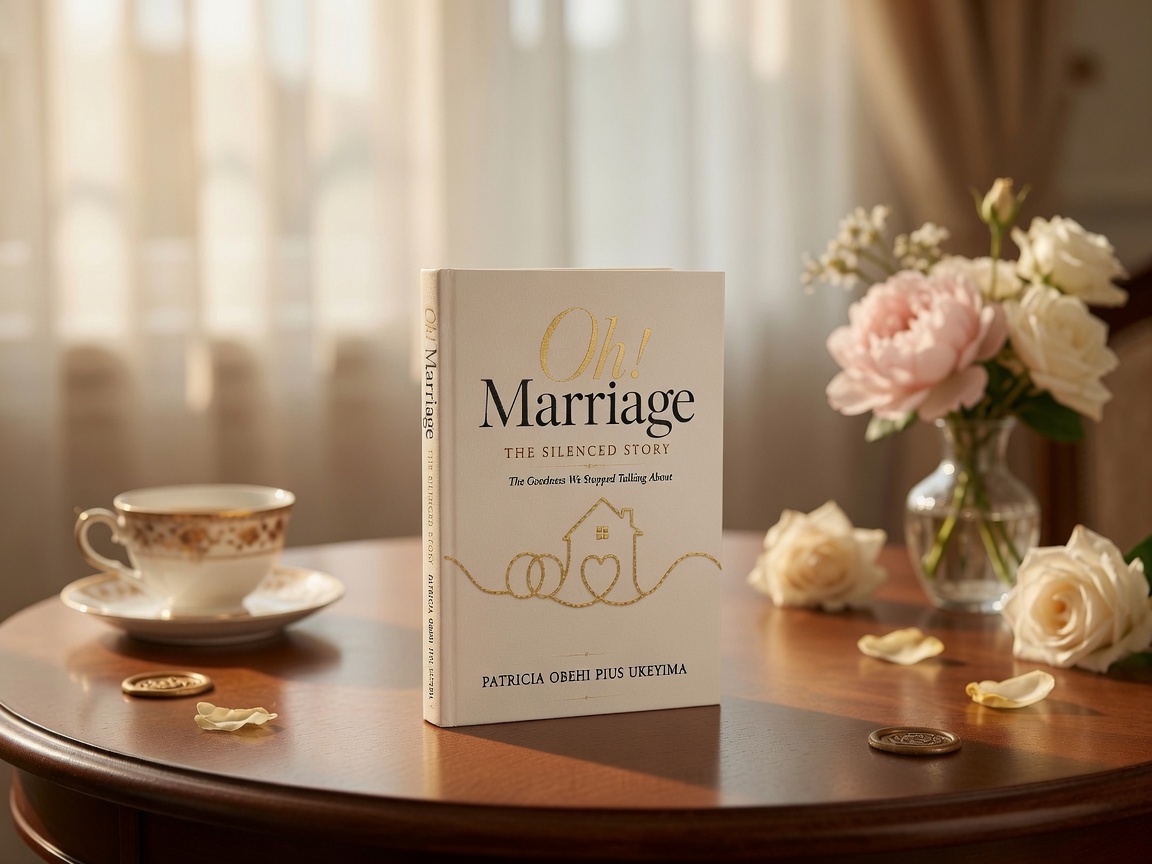
In Oh! Marriage: The Silenced Story, Patricia Pius Ukeyima explores conflict as a place where truth, respect, safety and repair must work together. Couples do not need perfect agreement; they need a trustworthy structure that allows disagreement to reveal what must change without making harm the price of honesty.
A Closing Reflection
Healthy communication helps truth enter the room. Healthy conflict determines what governs the room after disagreement begins. Name the issue, protect dignity, honour the pause and return to repair.
Patricia Pius Ukeyima Lawyer | Author | Speaker | Mentor Love Intentionally. Live Intentionally. Grow Intentionally.